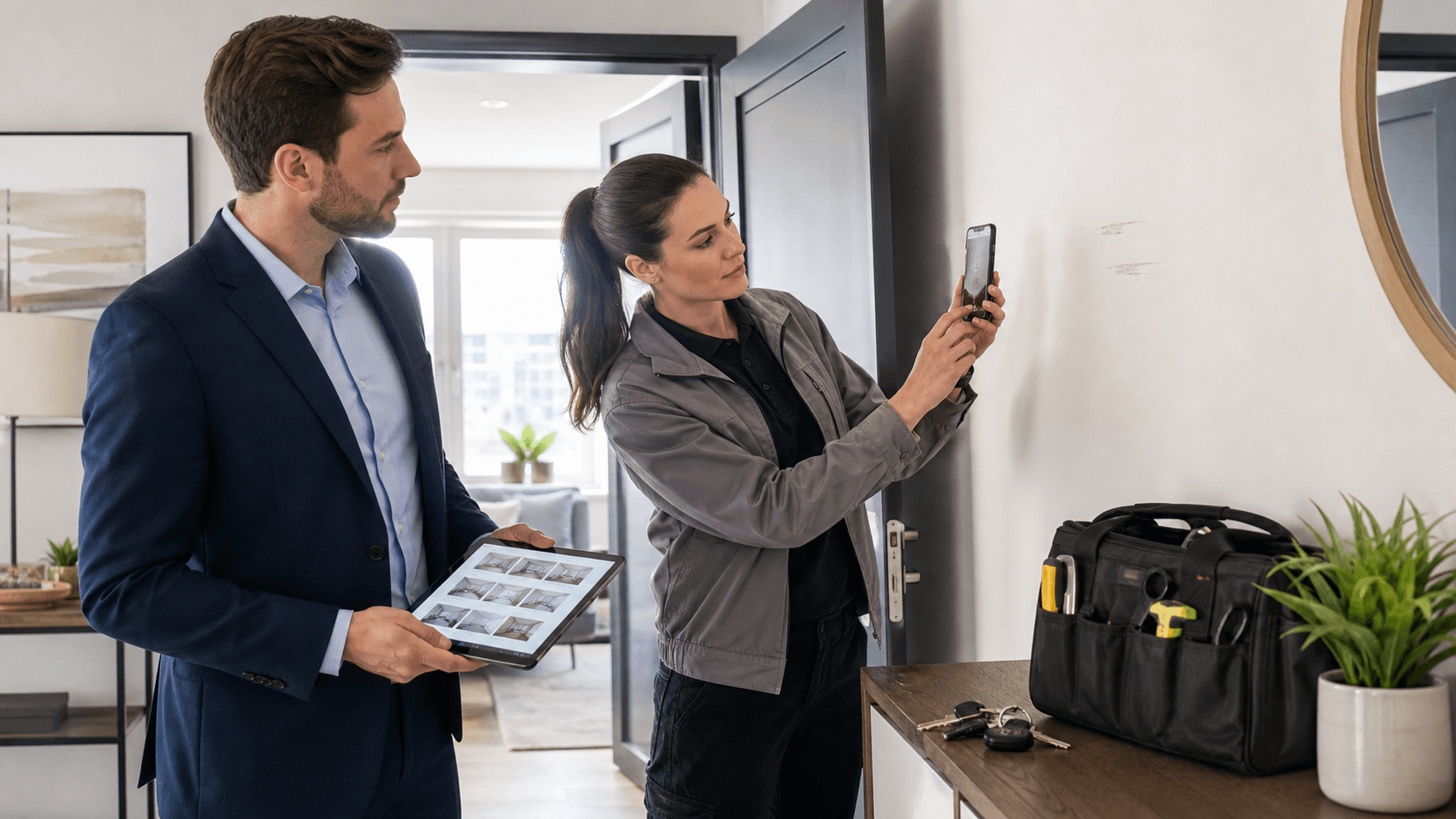
Clear records prevent small rental disagreements from turning into long deposit debates. A promise that a wall was clean, an appliance worked or an extra key was handed over can be easy to make and hard to prove once a tenancy or short stay ends.
We see the same pressure points come up repeatedly in UAE rentals: security-deposit deductions, claims of damage, cleaning concerns, utility readings and questions over furniture, fixtures, access cards or keys. The most helpful answer is not a better memory. It is a shared record created when the property changes hands.
Turn Every Handover Into Defensible Proof
A property handover should create more than a quick conversation at the door. It should capture what was there, what condition it was in, and when and where that record was made. This gives tenants, landlords, managing agents and holiday-home operators a clearer starting point if concerns arise later.
Structured photo reports are a practical way to create rental dispute evidence in the UAE. Rather than relying on a few images buried in a phone gallery, each observation can sit within a full property record.
A useful report should show:
- What was present in the property
- The visible condition of each item or area
- The date, time and GPS location of the capture
- Any notes about wear, faults or missing items
- Confirmation from the people involved in the handover
October is a particularly sensible time to put this process in place. Residents often return after summer travel, new leases begin, relocations pick up and holiday-home operators prepare for the cooler visitor season. When more keys are changing hands, clear reports help everyone stay organised.
Why Unclear Records Lead to Bigger Disputes
Without a detailed move-in record, two people can hold completely different views of the same mark, fault or missing item. A tenant may believe a cracked tile was already there. A landlord may believe it happened during the tenancy. Neither side may be trying to be difficult, yet memory alone rarely settles the question fairly.
Phone photos and written checklists can help, but they have limits when they stand on their own. A close-up image of a stain may not show which room it belongs to. A photo sent through a messaging app may be hard to find months later. A checklist marked "good condition" says very little about small scuffs, worn upholstery, appliance faults or loose fittings.
For this reason, we recommend treating the move-in report as a shared baseline, not as paperwork to rush through. When both sides review the same record at the beginning, move-out discussions have a consistent reference point. That can make deposit conversations calmer, handovers quicker and communication more professional.
Capture Evidence That Stands up to Questions
Strong rental dispute evidence in the UAE tells the full story, not just part of it. Start each room with wide-angle photographs that show the overall space. Then record closer images of anything that needs attention, including existing marks, damage, wear or faults.
A consistent inspection can cover:
- Walls, floors, ceilings, doors and windows
- Appliances, fixtures, furnishings and fitted items
- Meter readings and visible utility information
- Keys, remotes, access cards and other entry items
- Existing stains, chips, scratches, cracks or faults
Context makes each photo more useful. A close-up of a mark matters more when the report confirms the room, the item, the exact observation, the date, time and location. GPS-verified, time-stamped images are far easier to understand than loosely stored photos with no link to a completed inspection.
Comments also matter. Neutral notes can explain what a photo shows without turning the report into an argument. For example, "two small scuff marks beside the bedroom door, visible in photo reference" is clearer than simply writing "wall damaged". Specific wording keeps the focus on the property condition.
Digital signatures add another layer of clarity. Both parties can review the observations, add comments where needed and sign the completed report. Signing does not guarantee that no disagreement will ever happen, but it records what each person accepted or flagged at the time.
Create a Report Both Sides Can Check
Consistency is what turns a collection of photos into a dependable handover record. We encourage using the same room-by-room order for every move-in, move-out and property handover. Begin with property details, then work through each room, record existing issues, note meter readings, list inventory and confirm the keys or access devices being transferred.
This approach is useful for a long-term tenancy, a managed property or a short holiday stay. It also makes comparisons simpler later. When the move-in and move-out reports follow the same layout, you can review the condition of a room or item without searching through separate messages, folders and handwritten notes.
A completed report should be shared promptly with everyone involved. No one should have to rely on one party holding the only copy of the evidence. A central digital record is easier to retrieve months later, especially if a question arises after a tenant has left or a guest has checked out.
At MeInspect, we focus on reports that bring these details together through GPS-verified, time-stamped and digitally signed photo records. The aim is straightforward: give every party the same clear account of the handover.
Prepare for the Post-Summer Handover Rush
After the quieter summer period, property teams can face a faster flow of new tenants, returning residents, relocations and short-term visitors. Preparing before that rush helps reduce missed photos, unclear notes and last-minute confusion at the door.
Holiday-home operators have an added reason to stay prepared before the winter visitor season. Furnishings, linens, appliances, amenities and cosmetic wear should be documented before guest turnover increases. A reliable record can help separate pre-existing wear from concerns raised after a stay, while giving housekeeping and maintenance teams a clearer reference.
Simple habits can make the process easier to manage:
- Use one repeatable template for every property
- Train staff to capture rooms in the same order
- Complete the inspection while both parties are present where possible
- Record meter readings, inventory and access items before keys change hands
- Send the signed report immediately after the handover
Replace Promises with Proof Before Keys Change Hands
The best time to prevent a dispute is before responsibility changes hands. Clear photographs, precise notes, verified timestamps, GPS location data and digital signatures create a far stronger record than verbal assurances or scattered phone images.
Whether you are renting, letting, managing or preparing a holiday home, make condition reporting part of every handover. A shared, well-organised report gives everyone a clearer reference point and replaces uncertainty with evidence.
Protect Your Position From The Start
MeInspect helps tenants create organised records that support rental dispute evidence in the UAE when questions arise. Our condition reporting process makes it easier to document a property clearly at move-in and move-out. For tailored guidance on your next inspection, contact us today.